

What Carl Jung Saw on the Train
And Why You May Have Seen Something Like It Too
In October of 1913, a thirty-eight-year-old Swiss psychiatrist boarded a train from Zurich to Schaffhausen.
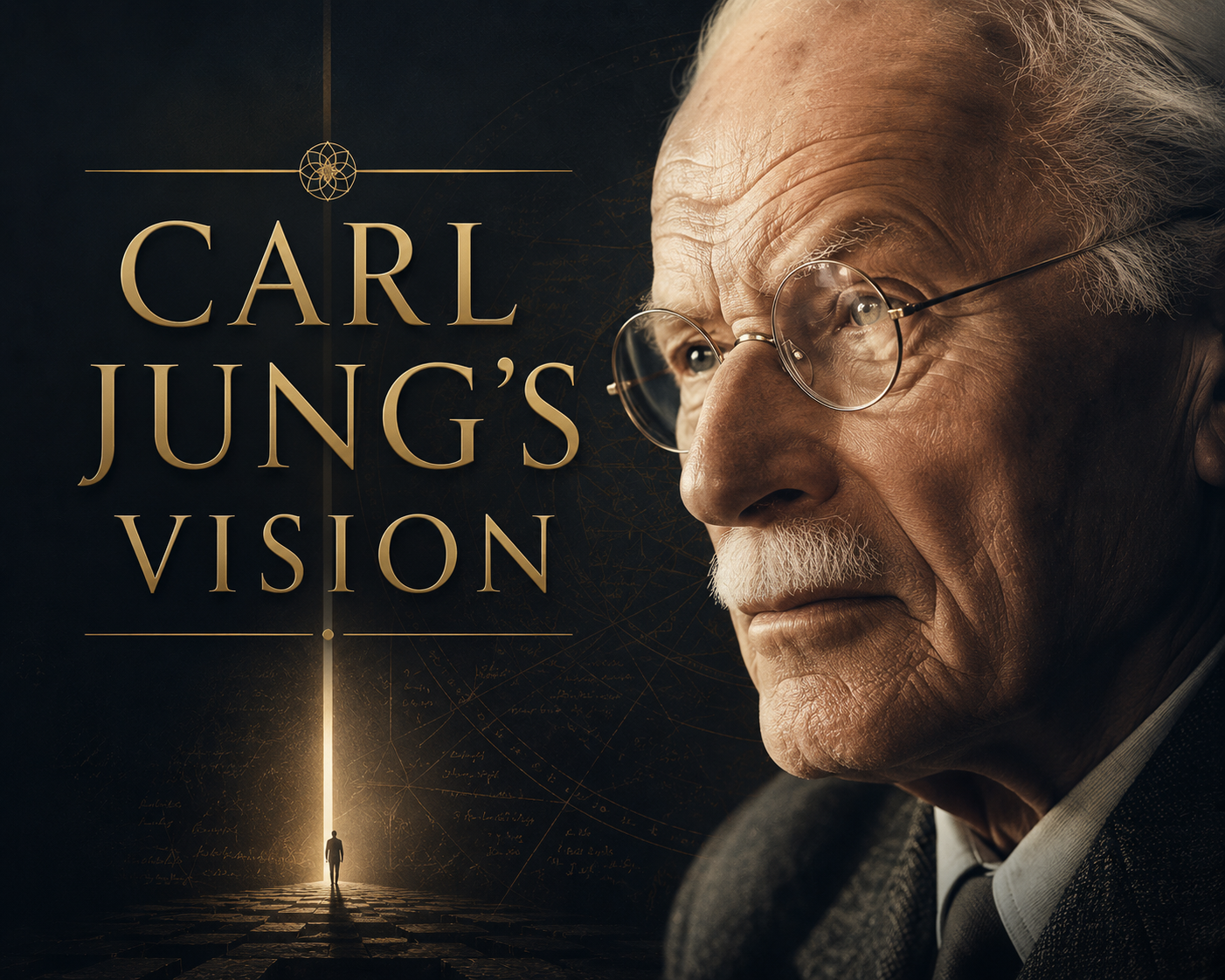
Carl Jung
He was, by any visible measure, a man who had arrived. Faculty position. Growing practice. International reputation. Heir-apparent to Sigmund Freud himself, who had publicly called him my crown prince.
He had, as he later wrote, achieved honor, power, wealth, knowledge, and every human happiness.
And then, somewhere between stations, the carriage filled with blood.
Not literally. The other passengers saw nothing. But Carl Jung, sitting alone by the window, watched a flood rise across Northern Europe, from the coast of the North Sea to the foothills of the Alps. Yellow waves. Floating debris. Bodies. The water turning red.
The vision lasted an hour.
Two weeks later, on another train, it came again. Same images. Same hour. Same blood.
Jung was, remember, a psychiatrist. He had spent more than a decade locking patients away for experiences exactly like this one. He knew what the diagnosis was supposed to be. He knew what it meant for his career, his marriage, his standing at the university, his name in the journals.
So he did what any sane professional in 1913 would do.
He tried to talk himself out of it.
He told himself he was overworked. He told himself it was the strain of his deteriorating friendship with Freud. He told himself, in the language of his own profession, that he was doing a schizophrenia, that the architect of the unconscious had finally been swallowed by it.
For eight months, he carried the visions alone. He did not write about them. He did not speak of them. He went to dinner parties. He saw patients. He kept the costume on.
And then, on the morning of June 28, 1914, a Serbian nationalist named Gavrilo Princip stepped out of a Sarajevo deli, raised a pistol, and shot Archduke Franz Ferdinand at point-blank range.
By August, the rivers of Europe were running with blood. World War I had begun.
Jung understood, in that moment, what had happened on the train. The vision did not come from within him. He had been a receiver, not a source. This wasn't happening inside his head; he was receiving it from a higher source. Something larger than his personal psyche, something older, deeper, and shared by every conscious mind. The thoughts and feelings of a collective had moved through him and shown him what was already gathering in the field.
He eventually called this field of knowledge the collective unconscious. An energetic substrate of human consciousness, older than anyone's individual life, that we are all swimming in, sending and receiving information that is stored there, whether we know it or not.
Not a metaphor. Not a poetic flourish. A real and operational dimension of the psyche, which connects everyone's thoughts, feelings, and emotions, holding the inherited patterns, images, and tensions of the entire human story.
Imagine the equivalent of reading the thoughts of millions of people around you collectively and tuning into it, like a radio does with FM frequency. All information is held together in a quantum field that exists in every corner of the universe. Some of us, such as Carl Jung, can connect and interpret this information more easily than others, but all of us are transmitting information back and forth from it, every second of every day.
And here is the part of the story that almost nobody tells.
If Jung had succeeded in talking himself out of the visions, if he had taken the pills his colleagues would have likely prescribed, if he had filed the experience under "stress" and gone back to being Freud's crown prince, he would not have given the twentieth century the language it eventually needed for the inner mind and the outer mind as we know it today.
There would be no archetypes. No shadow work. No anima and animus. No individuation. No Red Book. No depth psychology as we know it.
The entire field was born from one man's decision to stop pretending the experience wasn't real.
About The Author:
Ray Catania, Ph.D., is an author, metaphysical educator, and transformational coach who offers a modern, no-nonsense approach to personal transformation, consciousness, and the power of the mind. After surviving a near-death experience, Ray moved from atheism into a deeper exploration of metaphysics, human behavior, and the energetic power of thought. Today, he works to demystify consciousness and make transformation practical, accessible, and real.
He translates complex concepts into practical, repeatable methods that help people get unstuck, overcome fear, dissolve limiting beliefs, and become active creators of their reality. An award-winning author with a Ph.D. in Metaphysics, Ray's Awakening Series chronicles his journey from skepticism to expanded awareness, while teaching readers to master thought, elevate consciousness, and live with purpose.
His first book, The Atheist and The Afterlife, is the true story of his own spiritual awakening. His second, You Are Still Alive, Now Act Like It, shares how he developed the ability to help others. The third installment, (coming soon), expands on that journey and offers practical tools for transformation. Ray’s storytelling brings a unique voice to the metaphysical space, blending deep insight with well-placed humor, sarcasm, and wit that keep the subject matter grounded, relatable, and real. He shares techniques that many people can use to recreate what he has learned.
His work champions a simple promise: master your mind, master your reality. For more info visit RayCatania.Com
Disclaimer: This content is for entertainment purposes only and isn’t legal, clinical, or medical advice. If you’re dealing with a legal, medical or mental health concern, please consult a licensed professional.
